What we do
How R-FETPV trains veterinary field epidemiologists, and the strategic plan that guides the Program.
Our strategic plan
The direction of the Program is guided by a five-year strategic plan.
Our program
R-FETPV is a collaborative initiative developed in close partnership with the Thailand Field Epidemiology Training Program (FETP), veterinary experts from the Department of Livestock Development, leading universities, and the Food and Agriculture Organization of the United Nations (FAO).
This joint effort is grounded in the FETP’s core principle of “learning through providing services,” ensuring practical, hands-on learning experiences. The program follows a progressive, modular structure comprising three interrelated levels:
How the Program teaches
Training by providing services
Trainees learn while delivering real epidemiology services to their own veterinary authority — the work they produce is the training, and the training is the work.
Competencies based on needs
Teaching focuses on strengthening the skills and competencies that the trainee and their national veterinary service actually need.
Progressive, step by step
Continuing in the modular program depends on completing the previous module, so trainees move from basic, to intermediate, to advanced.
The Program month by month
What happens in each month of the year. The three modules run at the same time for different cohorts, so a single month can hold activities from more than one module.
SelectionBefore the course starts
- January — course announcement sent to national veterinary services
- Mid-February — applications submitted by candidates
- March – April — candidates selected, funding confirmed, letters of acceptance sent
Module 1 — Basic6 months · May – October
- May — online learning session, the pre-requisite for the first classroom training
- June – July — 1st visit to the R-FETPV training unit: orientation, presentation of the situation-analysis proposal, joint introductory course on field epidemiology and biostatistics, and epidemiology software for basic data analysis
- August – September — field practice at the home veterinary service; the final report on the animal health situation analysis is due at the end of September
- October – November — 2nd visit: oral presentation of the surveillance data analysis and Certificate of Completion for Module One
Module 2 — Intermediate12 months · November – October
- November – June — two outbreak investigations conducted as principal investigator in the home country
- End of May — first manuscript submitted
- September — second manuscript submitted, with a draft proposal for the field epidemiological study
- October — outbreak investigation demonstration workshop; 3rd visit: presentation of the two investigations, proposal writing workshop and placement at a veterinary faculty
- November — scholarship candidates for Module Three are selected
Module 3 — Master2 academic years
- December – January — scholarships announced; enrolment in a Master program at a veterinary medicine faculty in Thailand
- Over the two years — a thesis on a field epidemiological study and a manuscript published in a peer-reviewed journal
- January – May — 1st semester, with the 1st visit in February – March. In Year 4 the same months carry the 3rd semester
- August – December — 2nd semester, with visits in August – September and October – December. In Year 4 the same months carry the 4th semester
- December — mentor visit at the student workplace
Semester start dates follow the academic calendar of the university where the trainee enrols, and may change from year to year.
The three modules run at the same time for different cohorts. A Module 2 cohort starts in November of the previous year and a Module 3 student studies for two academic years on the same calendar (semesters 1 – 2 in Year 3, semesters 3 – 4 in Year 4), so the arrows ◀ ▶ mark work that carries over from, or into, another year. Only trainees who complete the written final report on time are invited to present and to continue to the next module; dates are indicative and may change from year to year.
Module details
Module One
Basic Epidemiology and Surveillance Data Analysis

Module One introduces the core concepts of field epidemiology, with a focus on animal health surveillance and the analysis of surveillance data. It combines self-directed study at the trainee’s home station with structured in-person sessions.
6 months (May – October, Year 1)
Basic epidemiology and biostatistics applied to animal disease surveillance and animal health data analysis.
Certificate of Completion — 1st Module
Learning objective
Trainees acquire basic knowledge in epidemiology and biostatistics, applied to effective animal disease surveillance and animal health data analysis.
Core competencies
- Apply basic epidemiological concepts
- Manage data input, storage, flow, retrieval, analysis and reporting
- Apply computer software to support epidemiological analysis
- Analyse field data for trends, distributions and risk factors
- Communicate findings and formulate relevant recommendations
Learning components
- Online learning – Self-paced, home-based sessions.
- Four in-person training sessions – Classroom-based, interactive sessions.
- Field practice (3 months) – Practical application of skills in real-world settings.
- Two in-person review sessions – Focused on fieldwork feedback and skill reinforcement.
Completion requirementSubmission and completion of one surveillance data analysis report.
Module Two
Investigation of Animal Diseases, Threats and Hazards
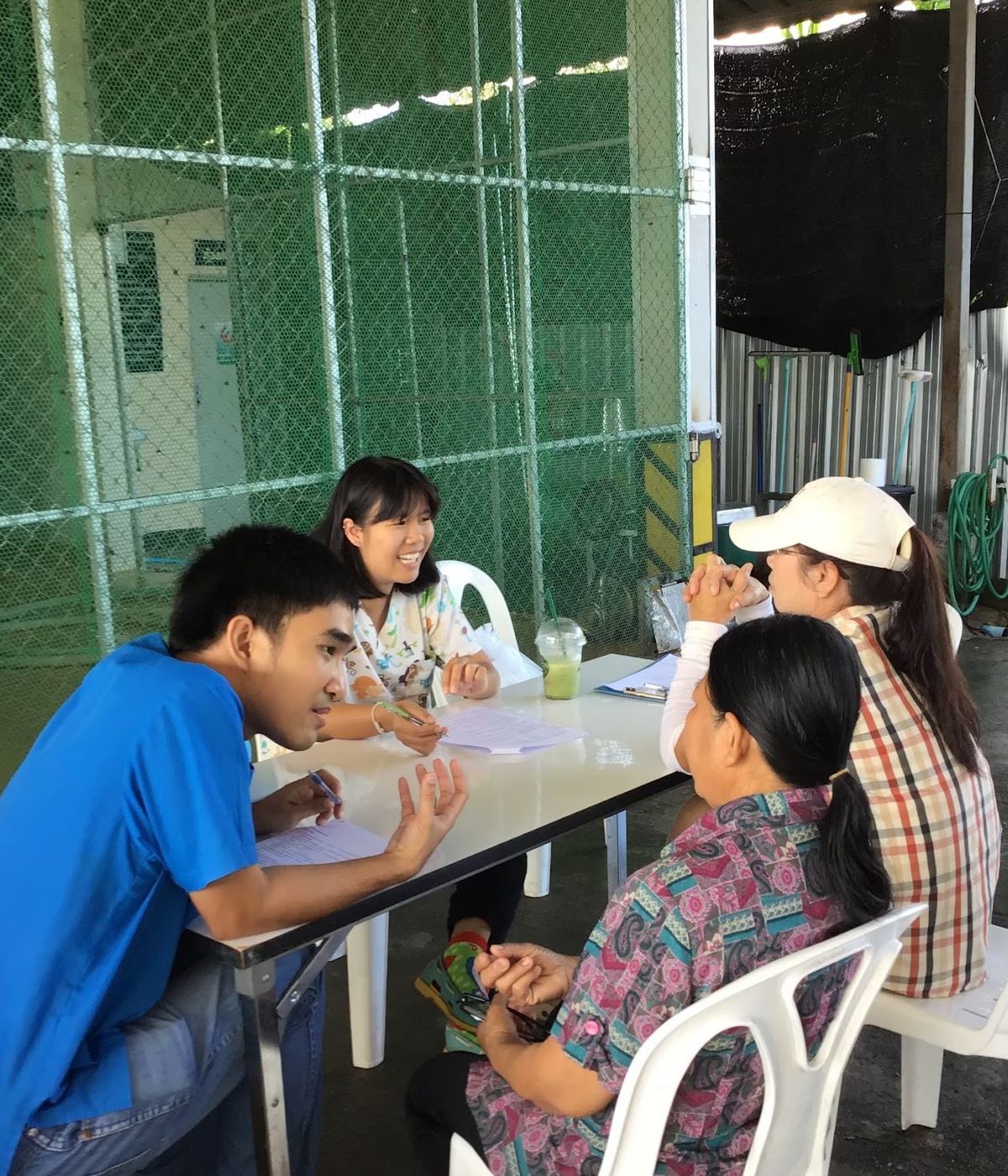
Module Two builds on Module One and equips trainees to lead field investigations of animal diseases, emerging threats and hazards.
About 12 months (November, Year 1 – October, Year 2)
Systematic field investigation of animal health and production problems, from specimen collection to recommendations.
Certificate of Completion — 2nd Module
Learning objective
Trainees learn to conduct systematic field investigation of animal health and production problems.
Core competencies
- Apply the steps of conducting an outbreak investigation
- Lead and coordinate a field investigation activity
- Collect and submit specimens, and interpret laboratory findings
- Collect field data, including designing appropriate questionnaires
- Analyse field data for trends, distributions and risk factors
- Communicate findings and formulate relevant recommendations
Learning components
- Two in-person training sessions – pre- and mid-fieldwork preparation and skill building.
- Field practice (3 months) – Conducting investigations in the field.
- Two in-person review sessions – Post-fieldwork analysis and presentation of findings.
Completion requirementCompletion of two field investigations related to animal diseases, threats, or hazards, with documented reports.
R-FETPV-MS
Joint Master’s degree in field epidemiology
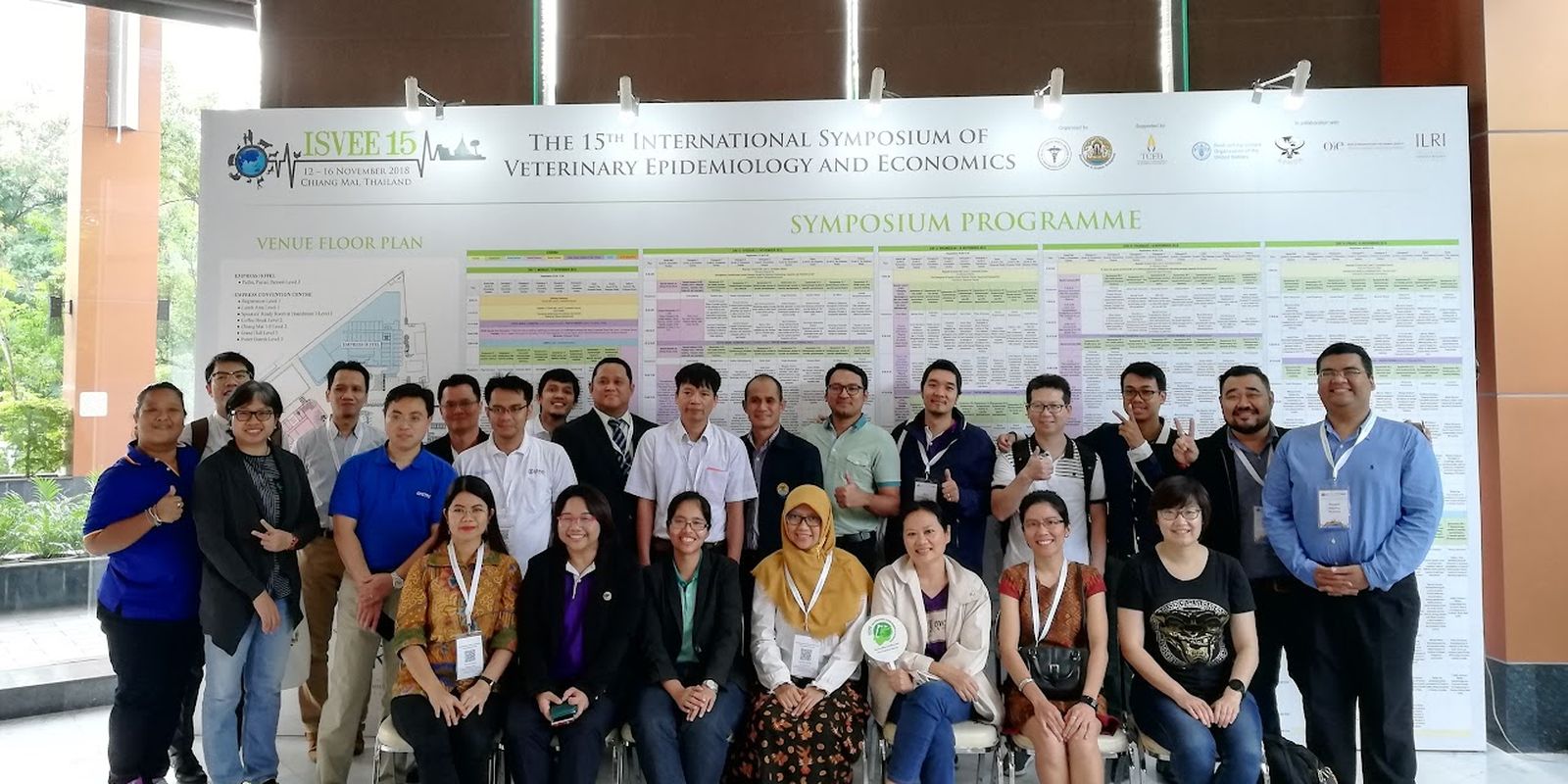
Trainees who complete Module One and Module Two may continue to postgraduate study at a participating university, leading to a Master’s degree in field epidemiology. Participating universities are Chiang Mai University, Kasetsart University and Chulalongkorn University. Merit-based scholarships may be available.
2 academic years, 4 semesters (Year 3 – Year 4)
A scientific field epidemiological study carried out as a Master degree at a veterinary faculty in Thailand.
A thesis on a field epidemiological study and a manuscript published in a peer-reviewed journal, leading to a Master degree and Certificate of Achievement — FETPV Modular Program.
Learning objective
A field research component integrated with a Master degree. The degrees offered are Master of Sciences, Master of Preventive Veterinary Medicine, Master of Veterinary Public Health, Master of Tropical Medicine, or an equivalent focusing on applied veterinary epidemiology.
Core competencies
- Propose and design a scientific field study
- Develop a research hypothesis for a field study
- Conduct a scientific literature review
- Apply ethical standards to conducting field research
- Manage a field research project, including planning and budgeting
- Prepare and submit a manuscript involving field studies for publication



What alumni report
Results of a survey of R-FETPV trainees and alumni on how the Program changed their work.
Source: survey of R-FETPV trainees and alumni.
Address : 69/1 Phraya Thai Rd, Ratchathewi Bangkok, Thailand 10400
Phone No. : +66 (0)80-698-7632 · +66 (0)2-653-4444 ext.4143
E-mail :